June 16, 2026 · Innovators, Why Alabama
From New York to Dothan: Why One Founder Chose the Wiregrass
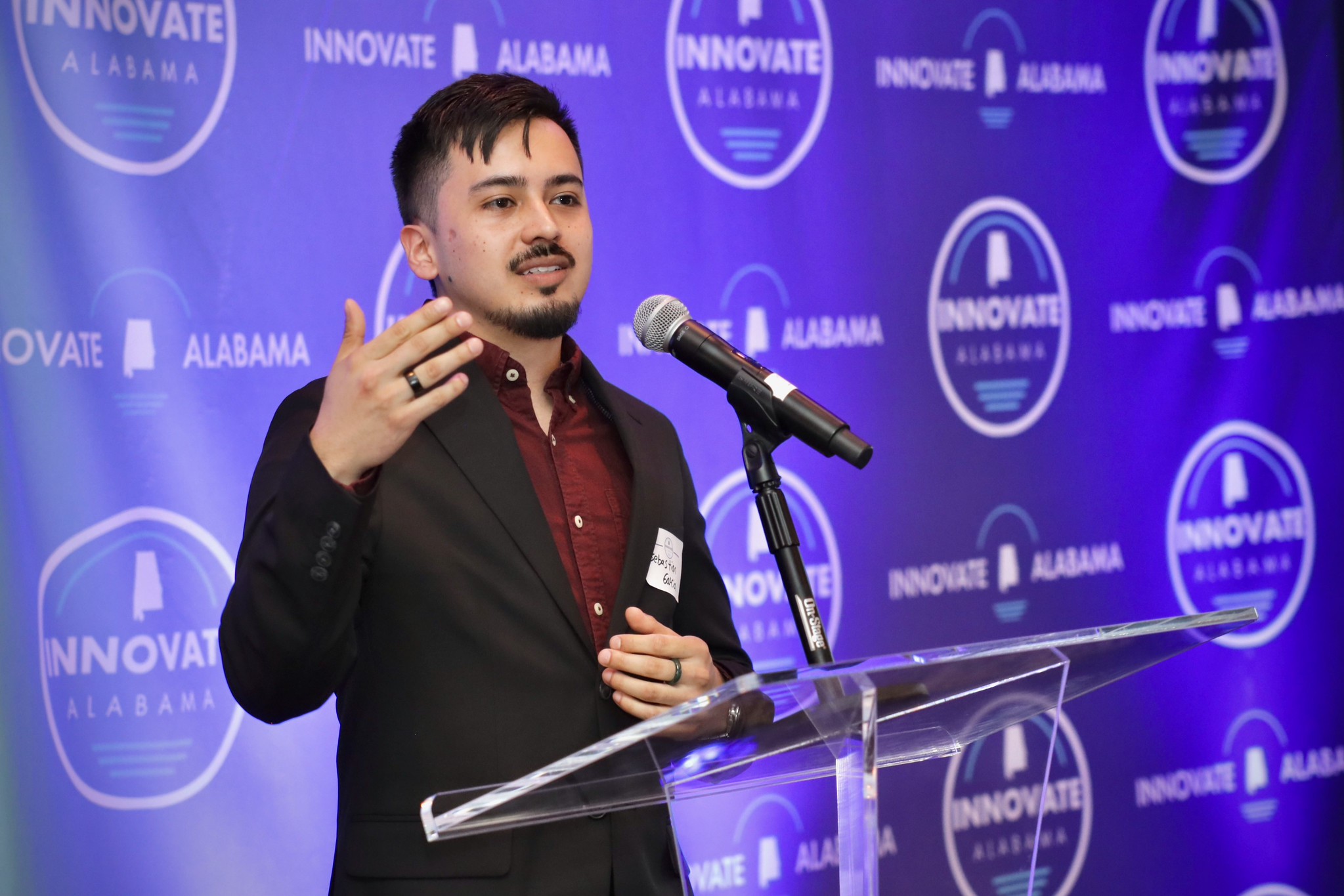
One year ago, J. Sebastian Garcia-Medina could not point to Dothan on a map. This spring, he moved to Dothan, the Peanut Capital of the World, to continue building Khaya Biosciences.
What changed came down to what he found after spending time in Southeast Alabama.
Through the strategic backing and support of Innovate Alabama, Garcia-Medina was introduced to the Wiregrass region via the HudsonAlpha AgTech Accelerator, which operates in partnership with gener8tor. The initiative kicked off its seven-week program by convening the Fall 2025 cohort in Dothan, home to HudsonAlpha Wiregrass, successfully driving vital new connections with local farmers, investors and regional industry leaders.
For Garcia-Medina, meeting the farmers became a source of inspiration.
“Being in Dothan and hearing local farmers’ stories was incredibly inspiring,” he said. “I was struck by the challenges they were facing and by how people here were actively adapting to economic change, building solutions rather than waiting for one.”
He kept coming back to what he saw there. Knowing what it takes to build a strong team from his PhD work, he saw many of those ingredients already in place in the Wiregrass.
“When you’re working with a community, you have to be part of that community.”
That conviction followed him home. As an early-stage company, Khaya needed a place where it could test, grow and build alongside the people its work is meant to serve. The Wiregrass gave him a place to take root.
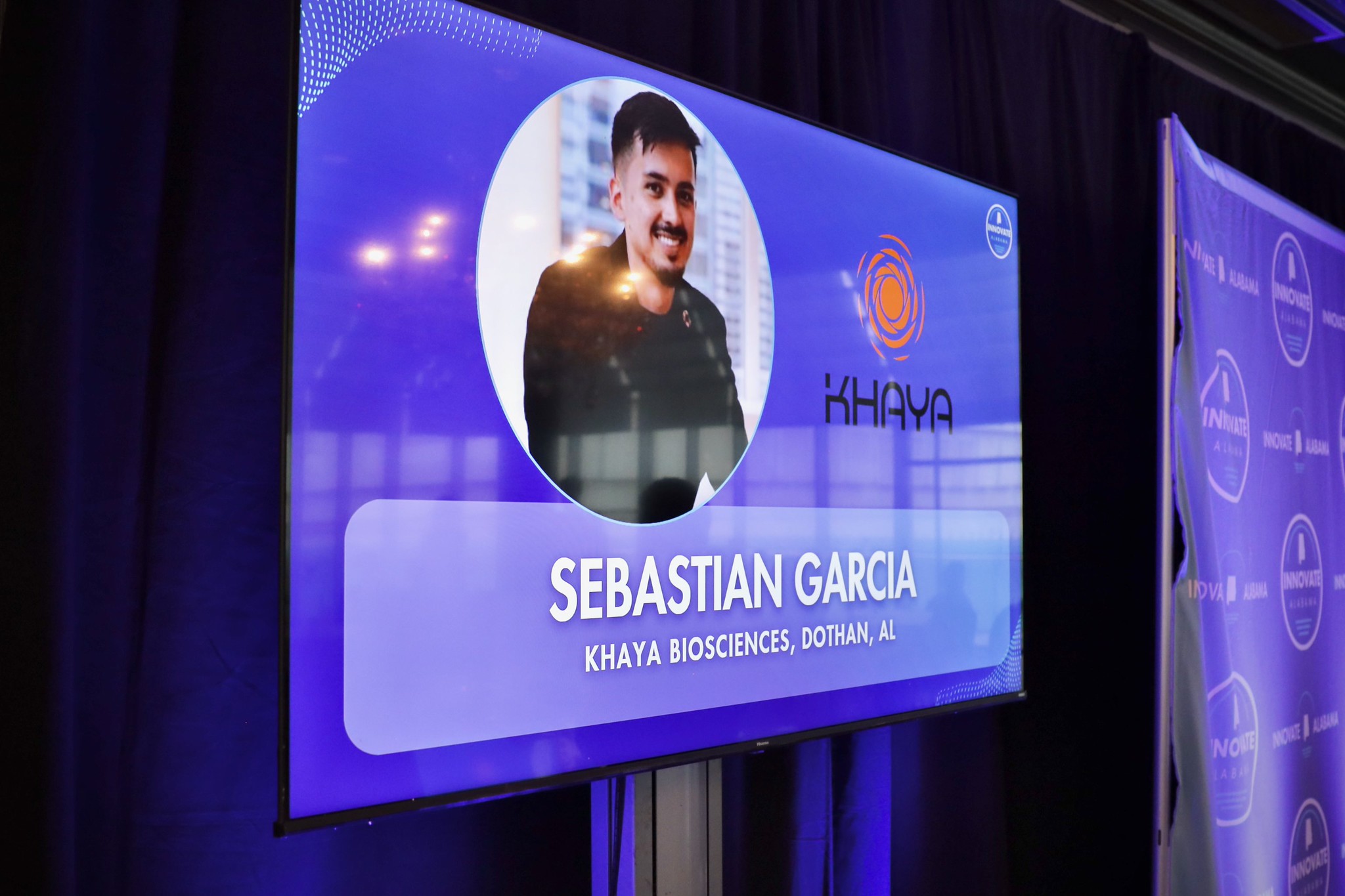
The idea for Khaya began taking shape while Garcia-Medina was pursuing his Ph.D. at Weill Cornell Medicine in New York. Surrounded by the scale of urban waste, he started asking harder questions about what true sustainability requires and why so many useful biomaterials remain expensive to produce at scale. Around that time, he began building Khaya independently, separate from his academic research.
In response, Khaya is developing biodegradable materials from industrial food waste. The company uses bacteria to convert byproducts from industries like dairy, brewing and crop processing into materials such as hydrogels, which can be used as wound dressings for chronic wounds, or even nutrient and water retention for seeds and soil. For Southeast Alabama, the payoff is straightforward: turning local waste into useful materials that can be put to work in a range of ways.
It is an approach Garcia-Medina describes as “regional waste turned into regional products.”
In a region where agriculture shapes both the economy and daily life, that line of thinking carries merit. Food-processing leftovers that might otherwise be discarded could one day become inputs for farms just down the road, breaking down naturally into the soil at the end of the growing season.
The decision to build in Dothan reflects a broader story unfolding across the region. New investment in research infrastructure, applied science and small business support is making it easier to move from concept to use. The recent opening of the Wiregrass Innovation Center has added to that effort, bringing those pieces together in one place.
“What Sebastian found in the Wiregrass is what we’ve been working toward: a place where founders can test their ideas in the field, alongside the growers who will actually use them,” said Dean Mitchell, director of HudsonAlpha Wiregrass. “That kind of collaboration takes a community willing to open its arms, its farms and its knowledge to people trying to solve real problems. Sebastian’s decision to locate here tells me we are on the right track.”
Khaya is still in its early stages. The next few years in Dothan will focus on validating the process using regional waste streams, hiring and training a local team, and building a model that could eventually be replicated elsewhere.
For Garcia-Medina, what began as a place he could not find on a map has become where he chose to build and stay.

Get the Download
The latest stories of inspiration and innovation happening all around our state, right to your inbox.