March 3, 2026 · Capital & Resources
Electric Indigo: Helping Kids See a Clearer Future
An elementary schooler peers at the board from the back row.
Squint. Lean forward. Adjust. Squint harder. The letters stay smeared and soft, just out of reach. That is often how myopia first appears.
The condition, also known as nearsightedness, makes distant objects difficult to see. More than one-third of children worldwide experience it, a figure projected to reach 50% by 2050. When it begins early, it increases the chances of more serious eye problems later in life.
Electric Indigo is an Alabama-based company focused on intervening before those risks become elevated.
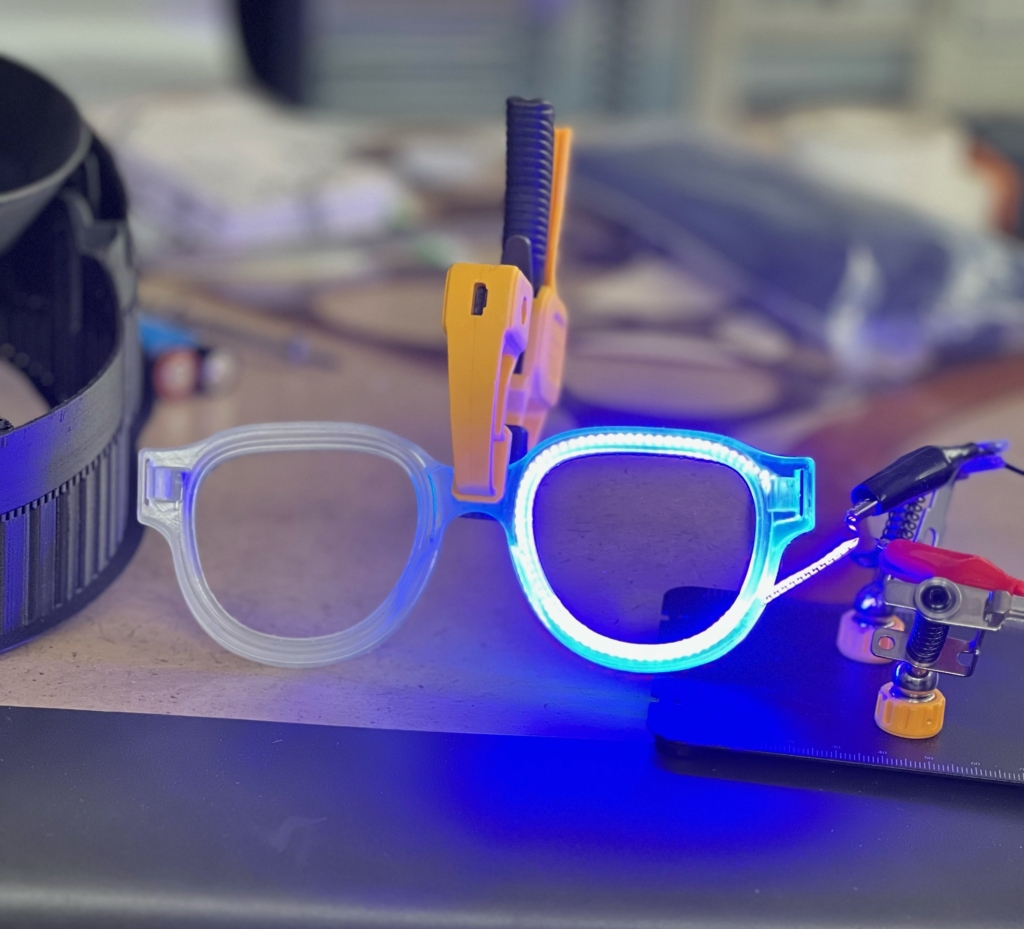
Standard glasses and contact lenses improve sight, but they do not slow myopia’s progression. Electric Indigo’s solution: light-emitting eyewear designed to influence how the eye develops during childhood.
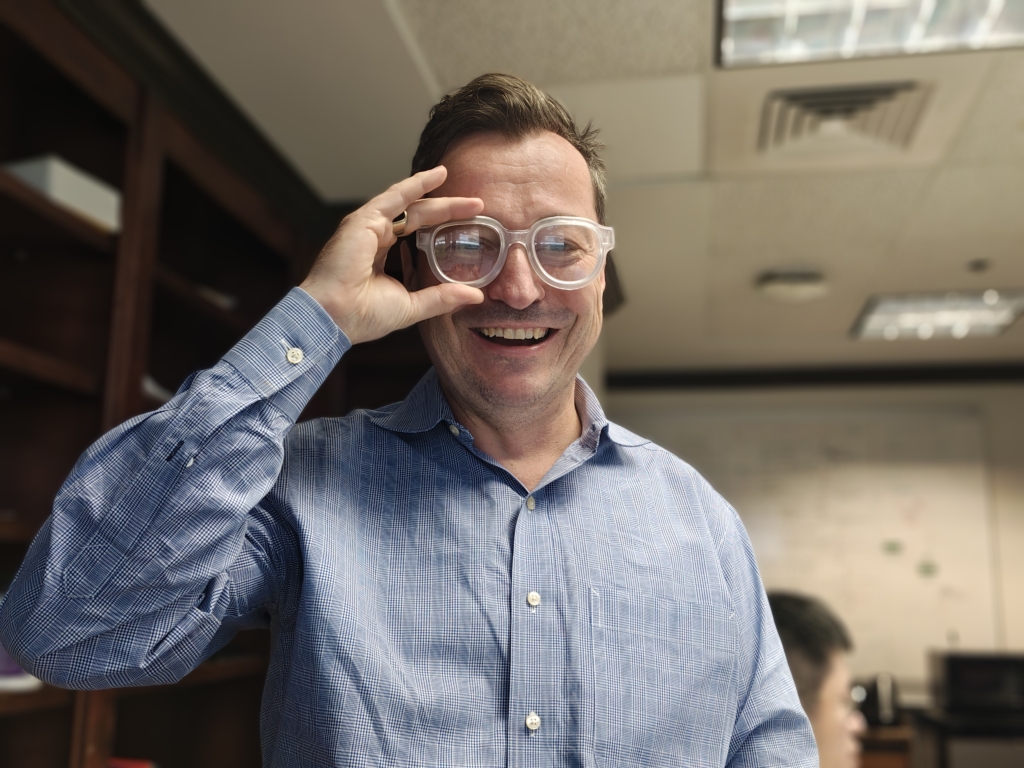
The approach is grounded in years of academic research. Led by Dr. Rafael Grytz, the Dennis Endowed Professor of Glaucoma Research at the University of Alabama at Birmingham (UAB) and conducted in collaboration with Dr. Richard Lang at Cincinnati Children’s Hospital Medical Center, the research identified how indigo wavelengths of light, common outdoors but largely absent indoors, are linked to eye growth patterns associated with myopia.
Understanding how light affects eye growth is one thing. Engineering eyewear that delivers it safely is another.
Electric Indigo worked with Hardware Park, a medical technology (MedTech) development center in Birmingham. Backed by the Innovate Alabama Tax Credit Program, industrial designers and hardware and firmware engineers helped move the device from concept to working form. Completed in December 2025, the initial builds include custom LED filaments, integrated electronics and frames produced on site.
In late 2025, Electric Indigo secured a federal Phase I Small Business Innovation Research (SBIR) grant from the National Eye Institute totaling approximately $357,000. With optometrist Dr. Andrew Pucker serving as CEO, the company is working through the regulatory requirements for FDA approval.
The first step is a pilot clinical study with young adults to test whether the product is safe, comfortable, and easy to use. Positive results would support expanded studies in children and, with FDA clearance, a path to market that families and eye care providers can readily adopt.
That progress is made possible in part by earlier investment in Alabama’s innovation infrastructure. Support from Innovate Alabama strengthened the labs and technical resources at Hardware Park, giving companies like Electric Indigo the tools they need to reach key milestones, attract additional funding, and prepare for manufacturing and commercialization in the state.
“Hardware Park has built an ecosystem of designers, engineers, consultants, and specialists that we have utilized for rapid prototyping and product development. I foresee that Hardware Park will transform Birmingham into a new MedTech hub in the South, and I’m thankful that Electric Indigo plays a small part in this effort.” — Grytz
Taken together, the work underway at Electric Indigo shows how an idea can move from campus research to clinical application when the right systems are in place, with implications that extend well beyond the classroom.


Get the Download
The latest stories of inspiration and innovation happening all around our state, right to your inbox.